


Kissimmee Divorce Mediation Steps You Need to Know: Your Complete Florida Mediation Process Guide
Divorce mediation in Kissimmee is a structured alternative dispute resolution process in which a neutral mediator helps spouses reach a negotiated settlement on parenting, finances, and property without a contested trial. This guide explains the Florida-specific mediation process, practical Kissimmee/Osceola County steps, and how mediation can save time and money while giving families more control over outcomes. Readers will learn what mediation is, whether it is mandated under Florida law, the step-by-step process used locally, key issues addressed during sessions, and concrete preparation checklists to arrive ready. The article also breaks down typical timelines and transparent cost factors for simple versus complex cases and describes post-mediation filing and contingency options if negotiation stalls. Throughout, the content references local resources—Florida Statutes Chapter 61 and Osceola County procedures—so you can follow every step from the initial consultation to filing a mediated settlement with the court.
What Is Divorce Mediation and Why Is It Mandatory in Florida?
Divorce mediation is a voluntary, confidential process where a neutral third party facilitates negotiation between spouses to resolve disputes and draft a mediated settlement agreement for court approval. Mediators do not decide outcomes; instead they guide discussion, highlight legal and financial implications, and help parties craft enforceable terms that reflect their priorities. In Florida, statute and local court rules encourage mediation and many family courts require some form of alternative dispute resolution or offer court-ordered mediation before contested hearings, consistent with Chapter 61 provisions that prioritize settlement where appropriate. Mediation’s confidentiality and interest-based approach contrast sharply with adversarial litigation, offering families a way to control outcomes and protect privacy while reducing court time.
Mediation’s practical benefit is that it channels negotiation toward concrete documents the court can review, making the eventual submission of a mediated settlement smoother. Understanding how mediation works in Kissimmee requires attention to local scheduling, mediator selection, and the role attorneys play in reviewing draft agreements. The next subsection explains how mediation typically proceeds for Kissimmee families, including where to file documents and how virtual sessions are handled.
How Does Divorce Mediation Work in Kissimmee?
Mediation in Kissimmee begins with an initial intake where the mediator or mediation provider explains rules, confidentiality, and session logistics, then schedules substantive negotiation sessions based on the parties’ availability. Local mediators may offer in-person sessions near downtown Kissimmee or virtual mediation options that use secure video platforms; the Osceola County Clerk of Courts provides guidance for filing and local deadlines that affect timing. Each mediation session typically follows a set agenda—financial disclosure, parenting time, child support, and property division—allowing parties to focus on one issue at a time and reduce emotional escalation. Mediators may propose breakout caucuses (private meetings with each party) or shuttle negotiations to facilitate progress while preserving neutrality.
Efficient mediation depends on good preparation and adherence to disclosure expectations under Florida rules, so scheduling includes deadlines for exchanging documents such as pay stubs, tax returns, and asset lists. This operational sequence makes the process predictable and positions parties to convert negotiated terms into a mediated settlement agreement ready for court submission. In the next subsection, we cover the mediator’s role and qualifications so you know what to expect from the neutral facilitator.
What Is the Role of a Mediator in Florida Divorce Cases?

A mediator’s primary role is to facilitate communication, clarify legal and financial issues, and help parties generate options that address interests rather than positions; the mediator remains neutral and does not provide legal advice to both parties. Mediators often hold certifications or training in family mediation and alternative dispute resolution, and effective mediators understand Florida family law concepts like equitable distribution and the child support guidelines in Chapter 61. Mediator duties include setting ground rules, managing confidentiality, drafting or helping prepare a mediated settlement agreement, and identifying when outside experts—such as financial valuators or custody consultants—are necessary to inform negotiations.
Because a mediator cannot represent either party or impose a binding decision, parties commonly work with attorneys who provide legal advice and review settlement language to ensure enforceability under Florida law. This division of roles preserves mediator neutrality while protecting each party’s legal interests. The following section outlines the step-by-step process Kissimmee families typically experience from initial consultation through court filing.
What Are the Step-by-Step Kissimmee Divorce Mediation Process Stages?
Divorce mediation follows an ordered sequence that moves from information gathering to agreement drafting and court submission; a clear step-by-step roadmap helps families plan timelines, costs, and document preparation. The stages below map the usual flow in Kissimmee: intake and initial consultation, mediator selection, disclosure and preparation, negotiation sessions, drafting the mediated settlement agreement, and submission to the Osceola County Court for final approval. Each stage has specific document needs and typical outcomes that influence how long the process takes.
To show the practical requirements at each stage, the table below summarizes essential documents and expected results.
This structured progression clarifies expectations and highlights where delays commonly occur, such as obtaining expert valuations. The next subsection provides a practical checklist for preparing to mediate in Kissimmee.
How Do You Prepare for Divorce Mediation in Kissimmee?
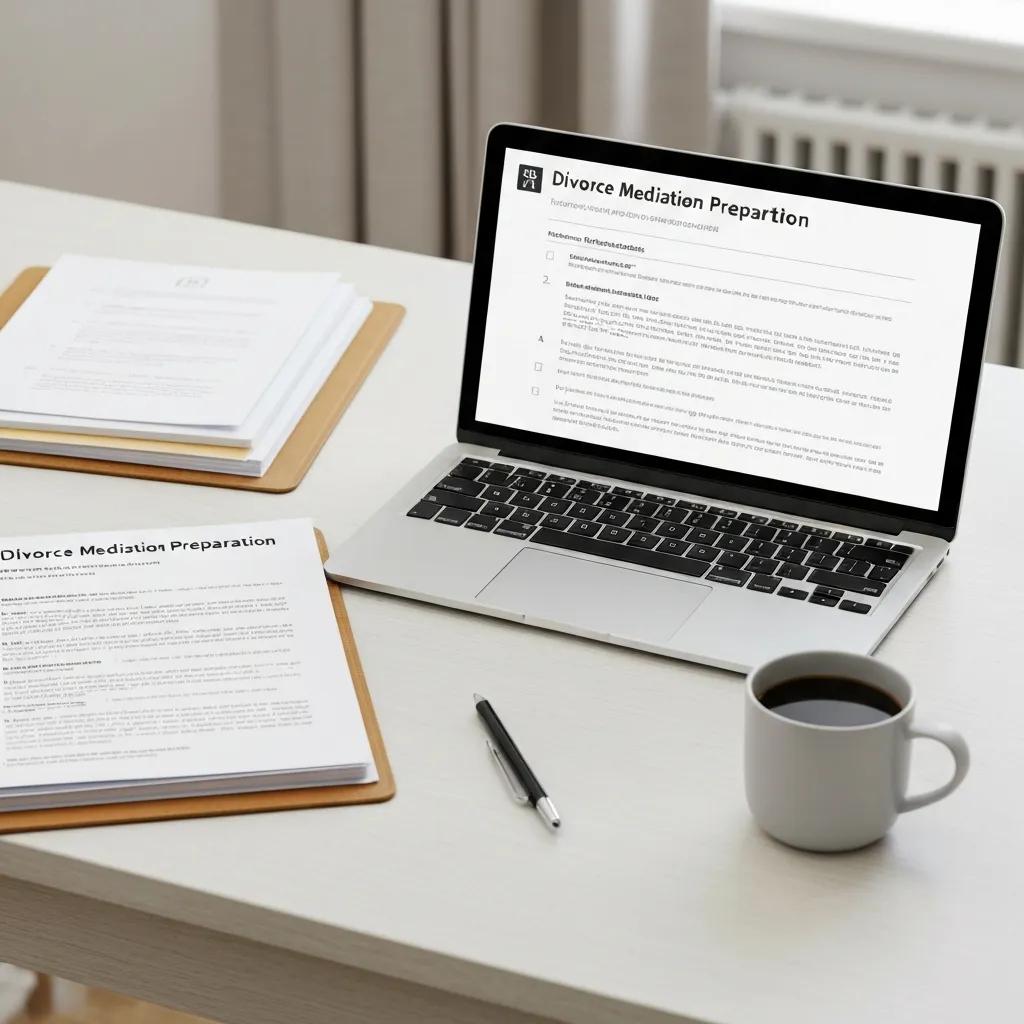
Preparing effectively accelerates mediation and strengthens negotiation positions by ensuring the right information is available when offers are exchanged. Essential preparation includes assembling financial records (recent tax returns, pay stubs, bank statements, retirement and mortgage information), drafting a proposed parenting plan if children are involved, and creating a prioritized list of issues and acceptable trade-offs. Good preparation also means framing negotiation objectives—deciding which items are priorities versus concessions—and organizing documents chronologically so the mediator and the other party can review them quickly.
Organizational steps include creating clear, labeled folders or digital files for each document type and preparing a concise financial summary showing monthly income, expenses, and asset balances. Arriving prepared reduces session time and can lower overall cost by minimizing the need for extra meetings. The next subsection explains how to choose a mediator in Osceola County so your selection aligns with your case needs.
How Is a Qualified Mediator Selected in Osceola County?
Selecting a mediator requires evaluating experience with family law matters, mediation style, fees, and local familiarity with Osceola County court procedures. Ask potential mediators about their training, previous case types handled, typical session structure, and hourly or flat-fee arrangements; inquire whether they have experience facilitating parenting plan negotiations and working with experts for property valuation. Local referral sources include the Osceola County court-approved mediation rosters and attorney recommendations, but parties may also choose private mediators with specialized family-law credentials.
Questions to vet mediators include: What percentage of cases reach agreement? How do you handle impasses? Do you provide draft settlement language? Are breakout caucuses offered? Comparing responses lets parties match mediator style to the case dynamics and expected complexity. Having selected a mediator, the next subsection describes what happens during negotiation sessions.
What Happens During Negotiation Sessions in Mediation?
Negotiation sessions typically follow a structured agenda: the mediator opens with ground rules and confidentiality reminders, then moves through financial disclosure, custody and parenting time, support issues, and property division. Offers and counteroffers are exchanged either openly or through private caucuses, with mediators summarizing points of agreement and identifying remaining gaps. Skilled mediators use re-framing, option-generation, and principled negotiation techniques to help parties move from positions to interest-based agreements.
Sessions often include breaks to allow counsel to confer privately and to let parties process offers; when technical valuation issues arise, mediators will recommend retaining experts or setting follow-up sessions to incorporate expert input. Clear record-keeping during sessions ensures that agreed terms are captured accurately for the mediated settlement agreement. The final subsection explains how a mediated settlement agreement is formalized and turned into an enforceable court order.
How Is a Mediated Settlement Agreement Reached and Finalized?
A mediated settlement agreement is reached when parties sign a written document that records mutually accepted terms for custody, support, alimony, and division of assets and debts; attorneys usually review the draft to ensure legal sufficiency before signing. The document should include clear language on payment schedules, tax treatment, parenting time schedules, dispute resolution for future disagreements, and any contingencies tied to valuations or sale of assets. Signatures and notarization may be required depending on local practice, and the agreement is then filed with the Osceola County Clerk of Courts as part of the dissolution paperwork.
Once submitted, the judge reviews the agreement to confirm that child-related provisions are in the child’s best interests and that the settlement complies with Florida law, at which point the court can enter a final judgment incorporating the mediated terms. If the judge requests clarifications, parties may provide amended language or additional documentation. With an understanding of finalization, the next major section addresses the substantive issues typically negotiated in mediation.
What Key Issues Are Addressed During Kissimmee Divorce Mediation?
Mediation covers the core substantive areas of most divorces: child custody and parenting plans, child support calculation, alimony or spousal support, and equitable distribution of assets and debts. Mediators help translate legal concepts into practical options tailored to family circumstances while attorneys ensure agreements meet statutory requirements under Florida law. Addressing each issue comprehensively during mediation reduces the risk of future litigation and creates a cohesive parenting and financial plan that suits local Kissimmee circumstances.
Below is a comparison table that maps common mediation issues to key negotiation considerations and typical resolutions you can expect in Kissimmee sessions.
This structured comparison helps parties see how mediation converts legal issues into practical settlement options and prepares them for drafting enforceable language. The next subsections examine each issue in more detail, beginning with custody and parenting plans.
How Are Child Custody and Parenting Plans Negotiated in Mediation?
Child custody negotiations center on the best interests of the child standard and practical parenting arrangements that reflect children’s ages, school schedules, and extracurricular commitments. Parties negotiate parenting time schedules, decision-making authority for education and healthcare, and dispute resolution mechanisms for future disagreements. Mediators encourage parents to propose detailed schedules—weekday routines, weekend rotation, holiday allocation, and summer plans—to reduce ambiguity and future conflict.
Sample clauses often include step-up networks for minor schedule adjustments, provisions for virtual visitation, and an agreed process for handling school or medical emergencies. These practical, detailed arrangements increase predictability for children and make court review more straightforward. Negotiated parenting plans then feed directly into child support calculations, which we cover next.
How Is Child Support Calculated and Agreed Upon in Florida Mediation?
Child support in Florida uses statutory guidelines based on both parents’ incomes, the number of children, and shared expenses; mediators and counsel incorporate guideline calculations into settlements while documenting any agreed deviations. Parties must disclose income sources, deductions, and childcare or medical costs so the mediator or an attorney can calculate guideline support and present options for agreed adjustments. Deviations from guidelines are documented with factual justification, such as unusual healthcare expenses or extraordinary childcare needs.
Agreements should specify payment methods, allocation of healthcare and uninsured expenses, and mechanisms for future modification tied to income changes. Properly documenting the calculation and rationale increases the likelihood the court will accept the agreed support terms. The next subsection addresses how alimony is negotiated in mediation.
What Are the Mediation Steps for Alimony and Spousal Support?
Alimony negotiation considers statutory factors—length of marriage, each spouse’s financial resources, time needed for education or training, and comparative incomes—and mediation frames these factors into realistic support structures that meet statutory tests. Parties may negotiate different types of alimony recognized in Florida, such as durational, rehabilitative, or bridge-the-gap support, with explicit terms for duration, amount, and termination events. Mediators assist parties in modeling payment scenarios and trade-offs that align alimony with property division or support obligations.
Clear settlement language should include payment mechanics, tax treatment where applicable, and contingencies if income changes significantly. Structuring alimony with defined endpoints or review triggers enhances enforceability and reduces future disputes. The following subsection explains how mediators handle the often-complex process of dividing assets and debts.
How Does Mediation Handle Property and Asset Division in Kissimmee?
Mediation approaches property division by first creating a comprehensive inventory of assets and debts, then agreeing on valuation methods and options for allocation that reflect Florida’s equitable distribution principles. Parties gather deeds, valuation reports, retirement statements, and business documents; mediators help prioritize which assets require expert valuation and which can be allocated by agreement. Solutions range from transferring titles, arranging buyouts with payment plans, splitting sale proceeds, or structuring offsets using retirement assets.
Common resolutions for complex assets—like businesses or closely held interests—include phased buyouts, professional valuation followed by equalization payments, or joint ownership terms with a liquidation plan. Documenting valuation assumptions and sale contingencies reduces post-settlement conflicts. With the substantive issues covered, the next H2 outlines the benefits of mediation for Kissimmee families.
What Are the Benefits of Divorce Mediation for Kissimmee Families?
Divorce mediation offers tangible advantages over litigation for many Kissimmee families, including lower costs, faster resolution, greater control over outcomes, and enhanced privacy. Mediation reduces time in court and litigation expenses by focusing sessions on decision points rather than lengthy discovery and contested hearings. Because mediated agreements are crafted by the parties, they often reflect family-specific solutions—scheduling adjustments, unique support arrangements, or creative property division—that judges may not be able to order.
Reduced conflict and confidentiality are critical benefits when children are involved; mediation’s private setting and emphasis on collaboration tend to lower emotional strain and preserve co-parenting relationships. With these advantages, the next subsections quantify time and cost savings, explain how mediation enhances control over outcomes, and detail privacy benefits.
How Does Mediation Save Time and Reduce Costs Compared to Litigation?
Mediation typically requires fewer sessions and less discovery than litigation, translating into lower attorney fees and faster finalization of divorce matters. Simple mediation cases with limited assets and no children can resolve in a handful of sessions over a few weeks, whereas contested litigation can extend months or years with multiple court dates and discovery disputes. Savings arise from reduced hearing preparation, fewer filings, and minimized expert expenses when parties agree to streamlined valuation approaches.
Parties who prioritize organization and early disclosure often complete mediation more quickly, reinforcing the value of preparation described earlier. The time and cost benefits of mediation make it an attractive path for families seeking efficient resolution while preserving dignity and control. Next, we explain how mediation gives spouses more control over outcomes.
How Does Mediation Give Spouses More Control Over Divorce Outcomes?
Mediation returns decision-making power to the parties by allowing them to design outcomes that fit their family’s needs rather than receiving court-imposed orders based on adversarial presentations. This flexibility enables customized parenting plans, staggered financial arrangements, and unique solutions for shared assets that reflect the couple’s priorities. Because parties participate in creating the terms, compliance rates generally improve and subsequent enforcement needs tend to decline.
Examples include crafting non-traditional custody schedules to accommodate shift work, structuring alimony tied to education milestones, or creating phased plans to transfer a family business. These tailored solutions often better preserve family stability and reduce relapse into conflict. The following subsection addresses mediation’s privacy and conflict-reduction benefits.
How Does Mediation Reduce Conflict and Protect Privacy?
Mediation’s confidential framework reduces public airing of private matters and encourages cooperation through facilitated dialogue and interest-based negotiation techniques. Mediators use de-escalation tools, structured agendas, and private caucuses to separate emotional reactions from practical problem-solving. Confidentiality also protects sensitive financial and personal information from becoming part of the public court record, which can be especially important for families concerned about reputation or privacy for their children.
By lowering adversarial dynamics, mediation helps protect parent-child relationships and often produces more sustainable co-parenting arrangements. This privacy benefit complements time and cost savings and supports more constructive transitions for families. After understanding benefits, the next section explains how Burns Family Law P.A. supports clients during mediation while keeping the main focus on the mediation process.
How Does Burns Family Law P.A. Support You During Divorce Mediation in Kissimmee?
Burns Family Law P.A. provides focused mediation support designed to protect client interests, clarify legal options, and facilitate enforceable settlements in Osceola County. The firm emphasizes personalized strategy, responsive communication, and practical preparation to help clients arrive at mediation with accurate disclosures and realistic settlement proposals. Attorneys from the firm can attend mediation sessions to advise clients, review proposed settlement language in real time, and ensure that terms reflect legal requirements under Florida statutes and local court practice.
By combining detailed legal analysis with local knowledge of Osceola County procedures, Burns Family Law P.A. helps clients convert negotiated terms into draft mediated settlement agreements ready for court review. The firm clarifies statutory considerations—such as equitable distribution and child support guidelines—so clients understand the legal implications of each option they consider. The next subsection outlines the specific attorney role during mediation sessions.
What Is the Attorney’s Role During Mediation Sessions?
An attorney’s role in mediation is to advise the client on legal rights, draft and review proposed settlement language, and help translate negotiated deals into enforceable provisions that a judge can adopt. Attorneys assess risk, propose alternative settlement structures, and ensure that terms around property division, support, and parenting are precise and legally sound. During sessions, counsel may caucus with clients to test offers, prepare counterproposals, or request clarifying language to avoid ambiguity that could lead to future disputes.
This attorney involvement preserves the mediator’s neutrality while providing essential legal protection to each party and improving the odds that a mediated agreement will be accepted by the court. The next subsection explains why clients choose Burns Family Law P.A. for mediation support in Osceola County.
Why Choose Burns Family Law P.A. for Mediation Support in Osceola County?
Clients seeking mediation support often select Burns Family Law P.A. for its local focus on family law, personalized representation, and practical approach to negotiating mediated settlements that stand up to court scrutiny. The firm’s service model emphasizes strategic preparation, clear communication, and a commitment to helping clients reach durable, enforceable agreements that reflect their priorities. Burns Family Law P.A. offers free consultations and can be reached to discuss mediation options, local procedures, and the best way to structure a mediation plan for Kissimmee families.
This combination of local legal knowledge and client-centered strategy helps streamline the mediation process and improves the likelihood of a complete, court-acceptable settlement. Having considered firm support, the next H2 provides transparent timeline and cost information for mediation in Kissimmee.
What Is the Typical Timeline and Cost of Divorce Mediation in Kissimmee?
Mediation timelines and costs vary by complexity, but Kissimmee cases generally fall into simple, moderate, or complex categories with corresponding session counts and expense ranges. Simple cases—no minor children, limited assets—often require one to three mediation sessions and can be resolved in a few weeks to a couple of months. Moderate cases with children or multiple assets may take several sessions over one to three months. Complex matters involving business valuations, contested custody issues, or multiple experts can extend to several months and require additional expert fees.
To clarify cost drivers and expected ranges, the table below outlines typical cost components, what they cover, and realistic influence on total fees.
Understanding these factors helps parties plan budgets and choose strategies—like limited-scope attorney representation or bundled mediation sessions—to manage costs. The next subsections detail time estimates and cost influences.
How Long Does the Florida Divorce Mediation Process Usually Take?
Timeframes depend on case complexity and readiness: simple uncontested mediations can conclude within 2–6 weeks, moderate cases often take 6–12 weeks, and complex matters involving experts or business valuations can extend to several months. Calendar timelines account for document exchange, scheduling sessions, obtaining valuations, and court processing after agreement submission. Faster resolution is more likely when parties exchange complete disclosures promptly and select mediators with available early session dates.
Court processing time for final judgment entry after a signed mediated settlement varies with docket congestion but is generally shorter than contested trial timelines; the judge’s review focuses on statutory compliance and the child’s best interests. With timing clarified, the following subsection analyzes cost influences in more detail.
What Factors Influence the Cost of Divorce Mediation in Kissimmee?
Several factors shape mediation costs: the mediator’s fee structure (hourly vs flat), attorney involvement level (full representation vs limited-scope review), need for expert witnesses or valuations, and the number of sessions required. Parties can manage costs by consolidating issues into fewer sessions, agreeing to limited discovery, or using court-approved mediators with set fee structures. Mediation reduces many litigation costs, but expensive expert valuations or intense custody disputes will raise the overall expense.
Practical cost-management strategies include preparing a thorough financial summary ahead of time, using a single mediator for continuity, and negotiating bundled session pricing where available. With cost and timeline context in place, the next major section turns to concrete preparation guidance to help parties arrive ready for productive mediation.
How Can You Best Prepare for Divorce Mediation in Kissimmee?
Preparation is the single most important factor in achieving a productive mediation outcome and shortening timelines and costs. Effective preparation combines document readiness, clear prioritization of issues, realistic expectations about legal standards, and emotional readiness to negotiate. A structured checklist and a negotiation approach focused on interests rather than fixed positions enhance the chance of reaching a durable mediated settlement.
For convenience, the items below list essential documents and preparatory steps to bring to mediation.
- Gather core financial documents required for disclosure.
- Draft a proposed parenting plan or schedule if children are involved.
- Prepare a prioritized issues list with acceptable trade-offs.
- Organize documents into labeled folders or digital files for quick reference.
- Meet with an attorney to review likely legal implications before the first session.
These steps reduce session time and provide a roadmap for productive negotiation by clarifying where compromise is reasonable. The next subsections list the documents you must bring and advisories on negotiation approach.
What Documents Are Essential for Florida Divorce Mediation?
A complete financial disclosure speeds mediation and avoids surprises that derail negotiation: recent tax returns, year-to-date pay stubs, bank and retirement statements, mortgage and deed documents, credit card and loan statements, business financials if applicable, and proof of childcare or school records when custody is at issue. For parenting matters, bring school schedules, medical records, and any documentation relevant to the child’s needs. Label documents clearly and provide both the mediator and opposing counsel with copies where requested.
Organizing documents into a concise financial summary with monthly income and expenses helps mediators and attorneys run guideline calculations and identify valuation gaps quickly. Being document-ready is the most direct way to shorten the mediation timeline. Next, we cover how to approach mediation behaviorally to maximize agreement potential.
How Should You Approach Mediation to Achieve a Successful Outcome?
Approach mediation with an interests-focused mindset: identify core goals, decide in advance which issues are negotiable, and prepare fallback positions that preserve essential interests. Use the negotiation strategy of separating interests from positions—ask why a particular outcome matters and propose alternative solutions that meet underlying needs. Maintain realistic expectations about legal outcomes under Florida law, and lean on attorney input to validate trade-offs.
During sessions, practice active listening, avoid reactive escalation, and use private caucuses for sensitive matters when needed. This disciplined approach increases the odds of producing a balanced mediated settlement acceptable to both parties and the court. As you finalize agreements, the next section explains post-mediation filing and contingency plans if mediation doesn’t produce an agreement.
What Are the Post-Mediation Steps After Reaching a Settlement in Florida?
After parties sign a mediated settlement agreement, the agreement is submitted to the court with required dissolution paperwork and supporting documents so the judge can review and enter a final judgment incorporating the settlement terms. Filing typically includes the signed settlement, parenting plan (if applicable), financial affidavits, and required court forms; the Osceola County Clerk of Courts provides local filing procedures. The judge examines child-related provisions for best interests and confirms legal compliance for property and support provisions before entering a final judgment.
If additional clarifications are requested, parties may file amended language or supplemental documentation. The following subsection details the specific submission and review process.
How Is the Mediated Settlement Agreement Submitted and Reviewed by the Court?
Submission involves preparing a complete packet—signed mediated settlement agreement, parenting plan, financial affidavits, and any notarized signatures—and filing it via the Osceola County Clerk’s accepted method. The court review focuses on completeness, whether child provisions meet statutory best-interest criteria, and whether the agreement is voluntary and informed. Judges may ask for brief hearings to clarify ambiguous terms or ensure that support and alimony provisions conform to statutory standards before entering judgment.
Prompt, accurate filing and attorney review prior to submission reduce the chance of post-filing clarification requests and expedite final judgment entry. If mediation does not produce an agreement, the final subsection explains available options.
What Happens If Mediation Does Not Result in an Agreement?
If mediation fails to produce a settlement, parties can pursue several next steps: attempt additional mediation sessions with different parameters, request court-ordered temporary relief such as temporary support or parenting orders, or prepare for contested litigation and trial. Each path has trade-offs: further mediation may still yield value at a lower cost, temporary orders provide short-term stability but do not resolve long-term issues, and litigation requires substantially more time and expense.
Clients should weigh the increased costs and emotional toll of moving to litigation against the potential benefits of additional negotiation or targeted mediation focused on specific impasses. When litigation becomes necessary, attorneys use the information gathered during mediation to refine their positions and prepare discovery and trial strategy.